2026-10-21 · Paul Hendricks
Indianapolis Dumpster Permit Rules for Street Placement
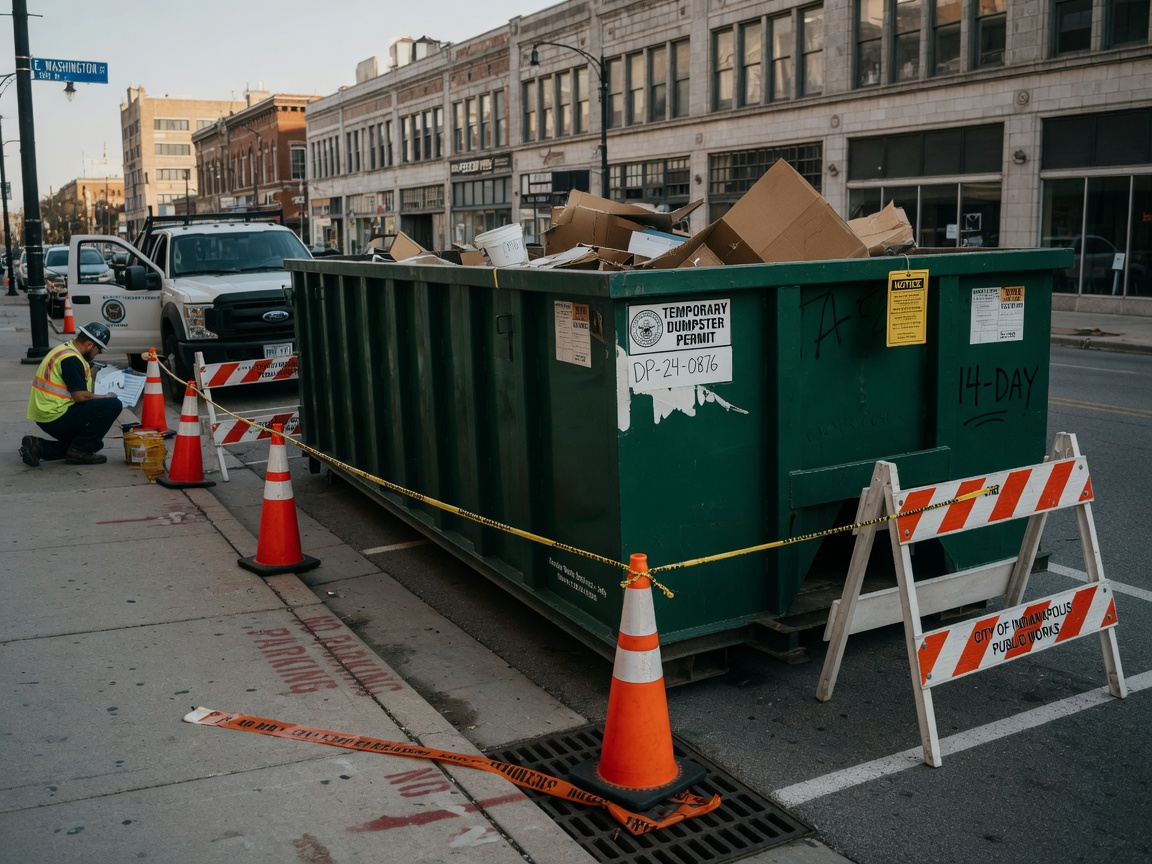
In Indianapolis, any Dumpster Rental placed on a public street requires a permit from the Department of Public Works before delivery. The permit must be obtained in advance, displayed visibly on the unit, and covers specific time limits and location restrictions that differ by street width and traffic patterns.
When a Permit Is Required
Street placement becomes necessary in older neighborhoods where driveways are narrow or absent. In areas such as Broad Ripple and Irvington, many homes sit close to the curb with limited side access, forcing units onto the roadway. Marion County rules treat any portion of the dumpster extending into the right-of-way as a street placement, even if only the wheels touch the pavement. Permits are also required along commercial corridors near Mass Ave and Fountain Square where parking lanes are narrow. Failure to secure approval can result in immediate removal orders and daily fines. The process applies equally to Residential Dumpster Rental projects and larger cleanouts, so homeowners and contractors both follow the same application path.
Neighborhood-Specific Placement Rules
Each Indianapolis neighborhood presents distinct constraints. Broad Ripple streets are often tree-lined with tight parking, requiring the unit to sit fully within marked spaces and leave adequate clearance for buses. Fountain Square and Chatham Arch feature brick crosswalks and frequent events that limit available curb length. In Haughville and Fall Creek Place, older infrastructure means some blocks have no curb cuts, so the dumpster must sit level on the asphalt without blocking storm drains. Lockerbie Square and Mass Ave carry additional restrictions near historic districts where sight lines for pedestrians must remain clear. These realities make early site photos and measurements essential before submitting the permit application.
Weather and Seasonal Factors
Indianapolis experiences a humid continental climate with hot summers and cold winters that directly affect street placement. During winter months, snow removal crews need clear curb access, so permits may include shorter duration windows or require reflective markers on the unit. Summer heat combined with frequent thunderstorms can soften asphalt, requiring crews to place plywood under the dumpster feet to prevent sinking. The related article Preparing for Dumpster Pickup During Indianapolis Winters outlines how frozen ground and salt application change handling procedures. These conditions also influence delivery timing when scheduling around nearby cities such as Carmel, Fishers, and Greenwood that share similar weather patterns.
Application Steps and Documentation
Submit the permit request through the city’s online portal or in person at the Department of Public Works office. Required items include the exact address, dumpster size, placement dates, and a site diagram showing distance from intersections and fire hydrants. Proof of insurance is typically requested, and the permit fee is paid at submission. Once approved, the permit document must remain attached to the unit for the entire rental period. Many residents in Marion County combine this step with scheduling through a local provider offering Dumpster Rental to ensure the correct unit arrives on the approved date.
Avoiding Common Violations
The most frequent issues arise from exceeding the permitted footprint or leaving the unit longer than approved. Units must not block sidewalks or reduce roadway width below city standards. In dense blocks near the Indianapolis Motor Speedway or Lucas Oil Stadium, traffic control plans may be required during events. Always verify that the chosen spot avoids utility covers and maintains drainage flow. Reviewing the list of Common Items That Cannot Go in Indianapolis Dumpster Rentals before loading helps prevent additional compliance problems. Proper planning keeps the project on schedule without unexpected city interventions.